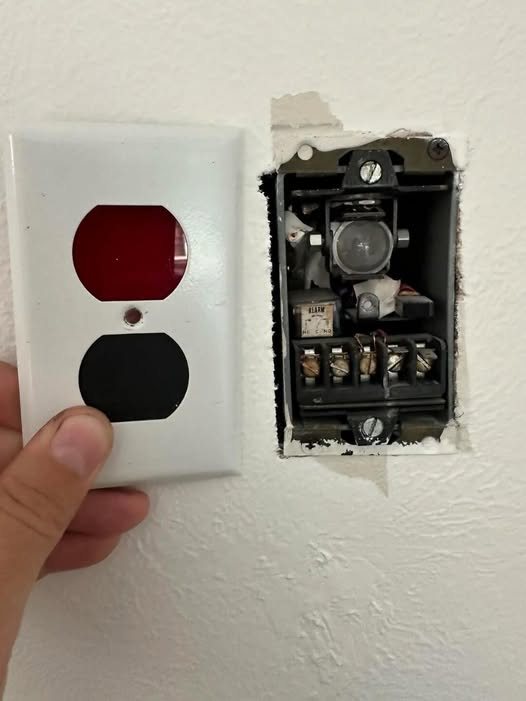
Long before high-tech video doorbells and smartphone-connected cameras, home security relied on clever inventions like the Detect-O-Ray. Introduced in the early 1940s, it was one of the first photoelectric security systems designed for everyday use—a true pioneer in home protection.
Think of the Detect-O-Ray as the grandfather of today’s motion sensors. But unlike modern systems, it used no computer chips or complex software. Its design was purely analog, a brilliant solution from an era when home technology was just starting to change daily life.
How the Technology Worked
The system was simple yet effective, consisting of three key parts:
1. The Transmitter: Sent out a beam of light—visible red or invisible infrared.
2. The Receiver: Placed across from the transmitter to catch the beam.
3. The Alarm: As long as the beam hit the receiver, all was quiet. Break the beam, and a loud bell or buzzer would sound.
No pressure plates, no tripping wires—just an invisible tripwire made of light. For homeowners in the 1940s, it felt like something out of a sci-fi movie: simple, silent, and revolutionary.
Where You Might Still Spot a Detect-O-Ray
These vintage devices were installed anywhere movement needed monitoring, such as:
- Long hallways or basement stairs
- Garages and back entryways
- Near safes or valuables
- Storefront entrances
They are small, rectangular boxes—about 2×3 inches—with black casings and a reddish lens, usually mounted 5–7 feet high. They worked in pairs, so if you find one, its partner is likely directly across the room, sometimes hidden under layers of paint or wallpaper.
The Science Behind the Beam
The Detect-O-Ray worked using the photoelectric principle, the same physics behind solar panels and automatic doors. No computers, no internet, just light, power, and clear sightlines. As vintage tech historian Dr. Elena Moss says:
“It was like having an invisible fence inside your home—quiet, reliable, and surprisingly effective.”
Why Vintage Tech Still Matters
Discovering a Detect-O-Ray is more than a peek at old hardware. It teaches lessons about innovation:
- Smart Homes Aren’t New: People have been automating homes for nearly a century.
- Good Design Lasts: Even as technology evolves, the goal of keeping homes safe remains constant.
- Historical Value: These devices are mid-century design artifacts, inspiring modern creators.
When renovating an older home, consider preserving these historical pieces—they showcase forward-thinking design from the past.
Can You Still Use One Today?
Many systems are disconnected, but hobbyists restore them using modern parts:
- LED infrared lights to replace old bulbs
- Sensitive photodiodes as modern receivers
- Wireless triggers to send alerts to a phone
Some even turn them into light art installations, highlighting the vintage red beam at night—a perfect blend of 1940s style and 21st-century tech.
Final Thoughts: The Elegance of Simple Security
The Detect-O-Ray proves that effective design doesn’t need flashy apps or blinking lights. Sometimes, all it takes is a clever idea and a beam of light.
“I’m protecting what matters.”
A small red lens in an old house isn’t just a gadget—it’s a piece of security history, a glimpse at how people learned to feel safe decades before modern technology.