Two Stacks of Paper
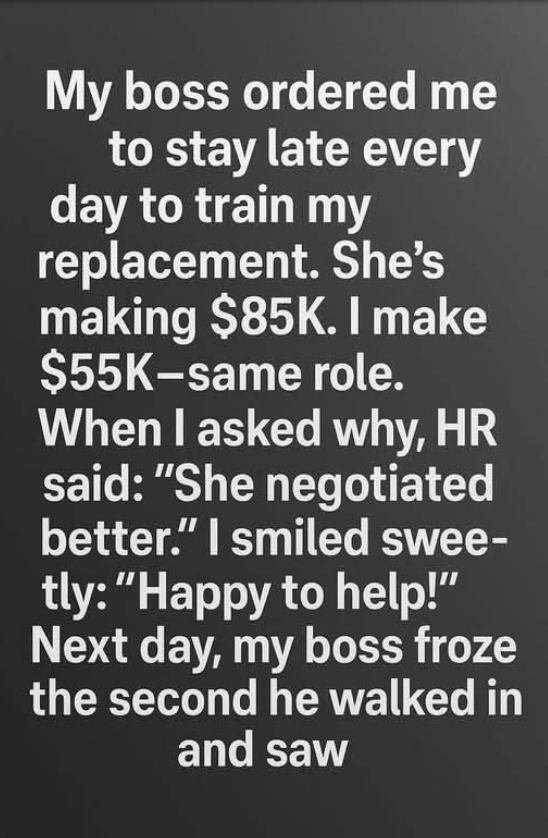
The next morning, he walked into the training room and fell silent. Waiting on the table were two very different piles:
Official Job Duties
A thin, almost laughable stack outlining the limited tasks formally associated with my position.
Tasks Performed Voluntarily
A much larger stack documenting everything I had done behind the scenes—late-night fixes, vendor crises, process redesigns, supply chain patches, and countless invisible responsibilities I took on simply because someone needed to.
My replacement stared at the papers with wide eyes. My boss’s expression went pale. The truth was sitting on the table, impossible to ignore: I had been doing the work of multiple employees while being paid for one.
Training—But Not the Way They Expected
From that moment on, I trained strictly within the boundaries of my job description. Nothing more. No shortcuts, no undocumented methods, no clever workarounds I had built over years of quiet dedication.
Whenever my replacement asked how I handled complicated issues—things like escalations, system crashes, vendor disputes, or emergency reorganizations—I calmly said:
“You’ll need to check with management. Those tasks weren’t officially assigned to me.”
For years, that sentence had been used to limit my growth. Now, it became a mirror they could no longer avoid.