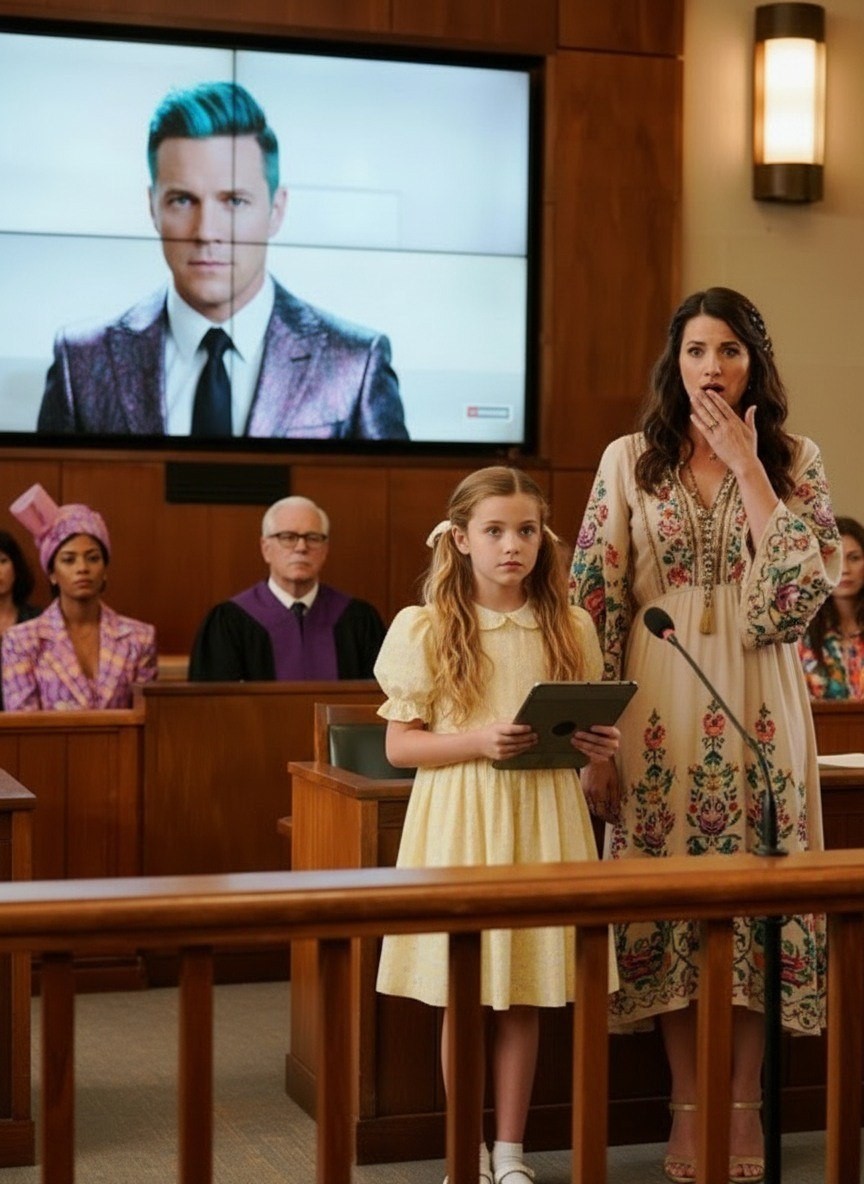
He presented himself as a calm, organized, and reliable father. With his impeccable suit and soft voice, he was convincing. And people believed him.
In court, he held my gaze for only two seconds before looking away, as if I were an embarrassing object he had already disposed of.
Harper was sitting next to me and my lawyer on the first day of the hearing.
Her feet were not touching the ground.
Her hands were folded in her lap.
This cautious attitude broke my heart.
He didn't want her there, but Caleb insisted. He said she would help the judge "face reality."
Apparently, the reality was that a little girl had to witness the self-destruction of her parents.
Caleb's lawyer was the first to speak.
“Mr. Dawson has always been the child’s primary caregiver,” she said softly. “He oversees his upbringing and provides him with stability. Mrs. Dawson, on the other hand, has unpredictable mood swings and has exposed him to inappropriate conflicts.”
Inappropriate conflicts.
I had proof: text messages, bank statements, unexplained absences, money diverted to an account whose existence I didn't even know existed.
My lawyer advised me to remain calm. Everything would be presented correctly.
Yet the judge's face remained neutral. This neutrality gave the impression of being invisible.
As soon as Caleb's lawyer finished speaking, Harper moved.
She raised her hand. Small. Firm.
"Harper..." I murmured, trying to gently silence her.
But she stood up anyway. She looked the judge straight in the eyes with a seriousness that belied her ten-year age.
"Your Honor," she said in a trembling but courageous voice, "may I show you something? Something that Mama doesn't know about."
Silence reigned in the courtroom.
Caleb abruptly turned his head towards her. For the first time that day, he lost his composure.
"Harper, sit down," he said in a tense tone.
She did not sit down.
The judge leaned slightly forward.
"What would you like to show me?"
Harper swallowed.