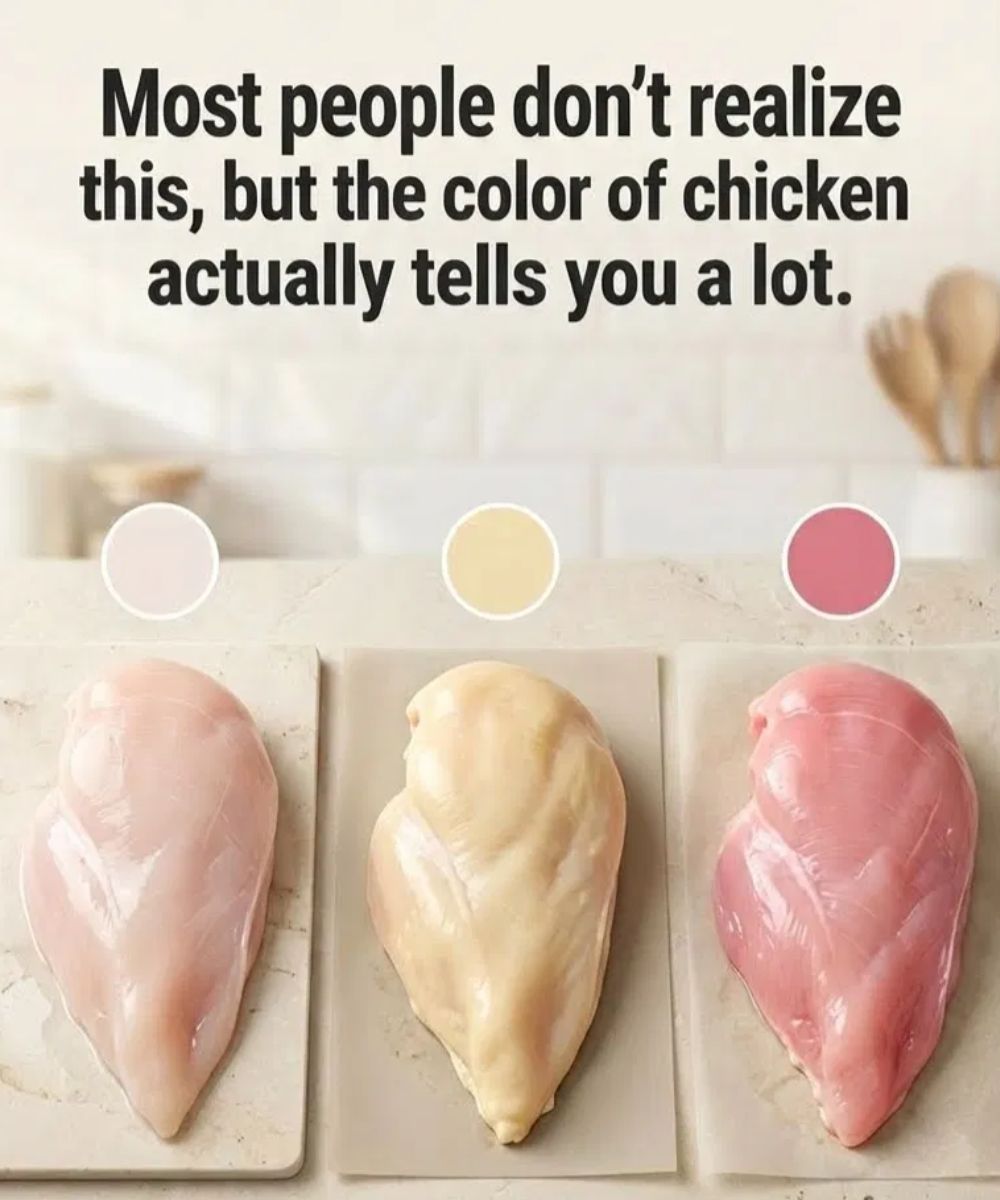
What truly matters isn’t immediately visible.
Labels provide far more insight than appearance. Terms like pasture-raised, organic, free-range, or certified humane give clues about living conditions, diet, medication use, and animal welfare. These factors affect not only ethics, but also nutrition and flavor.
Your own senses also play a role. Fresh chicken should smell clean and feel firm. Any sour or sulfur-like odor signals spoilage, no matter the color. Once cooked, taste and juiciness become the real measure—and those qualities are shaped far more by how the chicken lived than by how it looked in the package.
In the end, there’s no single “right” color of chicken. The best choice depends on your values, your budget, and the kind of meal you’re planning. Sometimes convenience matters most. Sometimes flavor does. Sometimes ethics guide the decision. None of those priorities are written in yellow or pale white.
The meat aisle is full of untold stories. Color is only the opening line. The rest is up to you to discover.