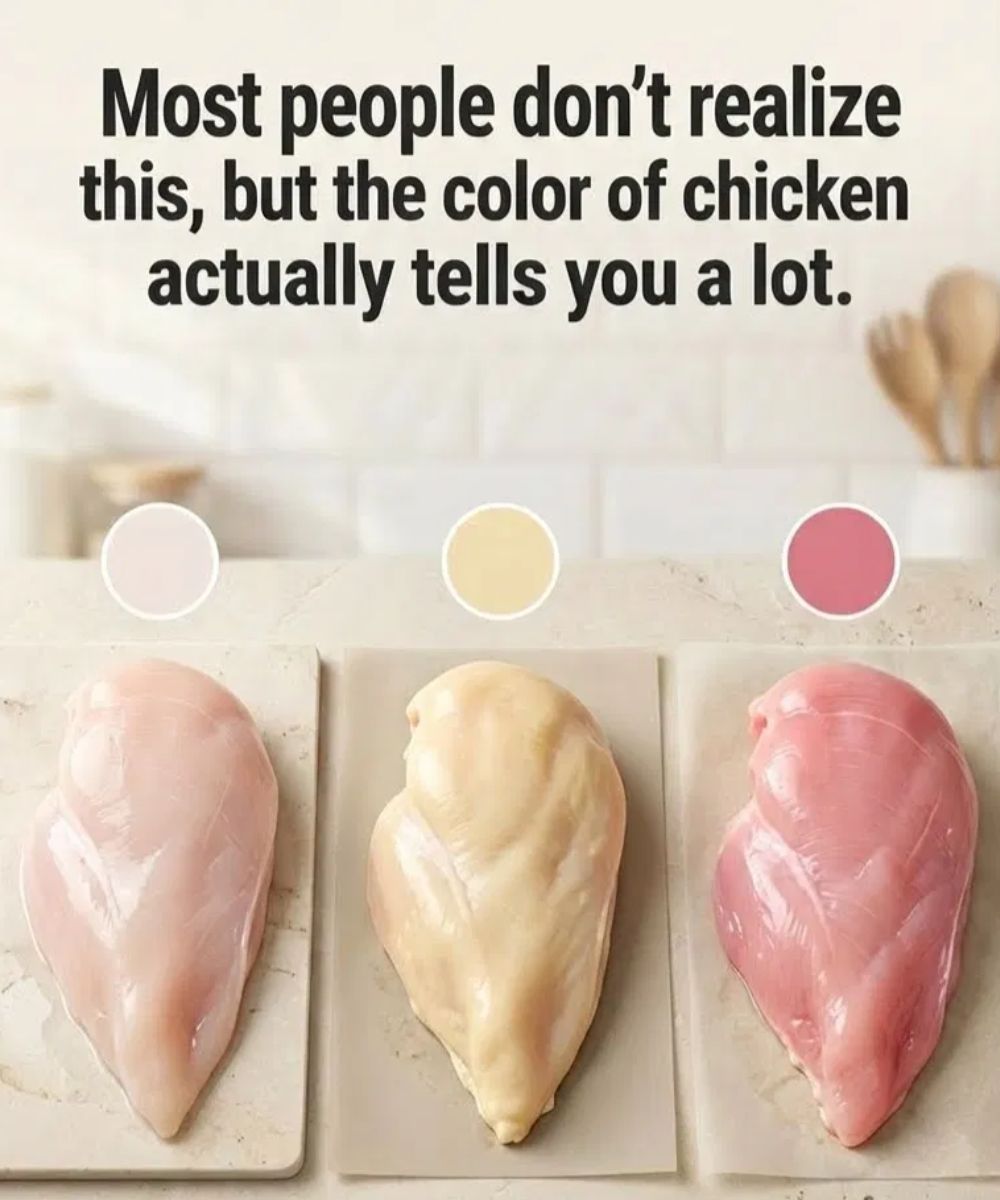
Pale chicken is most often linked to large-scale commercial farming.
These birds are bred for fast growth and efficiency. Their diets are tightly managed to maximize weight gain, and they typically live indoors with little room to move. This system produces affordable chicken in massive quantities, which is why lighter-colored meat is so common on supermarket shelves. While the pale color doesn’t automatically mean the meat is unhealthy or unsafe, it does reflect a production model focused on speed rather than natural behavior.
Yellow chicken usually suggests a different background.

The deeper color often comes from feed rich in natural pigments, such as corn, marigold, or other plants containing carotenoids. Chickens that spend more time outdoors, scratching in grass and eating insects, also tend to develop a golden tone. Slower growth and more movement often lead to firmer meat and a fuller flavor—what many people describe as chicken that tastes the way it used to.
Still, color can be deceptive. Some producers enhance the yellow shade through specific feed choices simply because shoppers associate that color with higher quality. In these cases, the chicken may still be raised under intensive conditions, just packaged to look more “natural.” That’s why color alone can’t reliably tell you how the bird was raised or how the meat will taste.